What Does the Beggining Bow in Martil Arts Mean
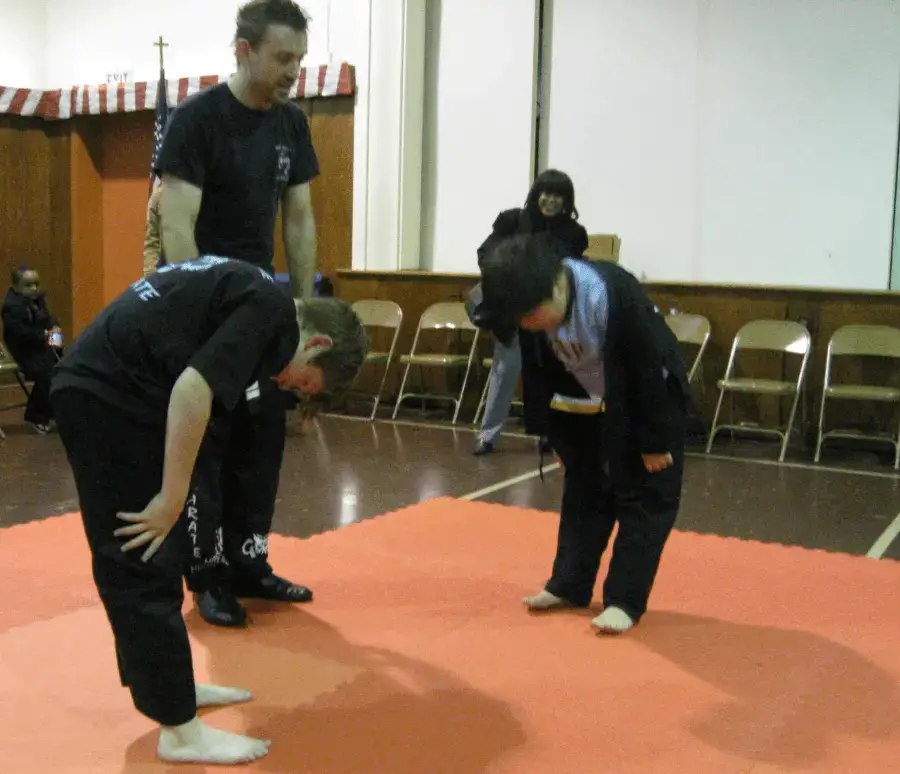
Bowing at ane time was non merely found in the martial arts in America. It was once an American custom that we inherited from our European ancestors. It fell out of do and today we associate it with Asian civilisation or religious piety. Yet, is that what it means in the martial arts?
Bowing in the martial arts is used as a sign of respect, greeting, thanks, apology, and humility. Bowing is non simply found in the martial arts and Asian cultures. Peoples throughout history have utilized the bow.
Associating a bow as strictly a custom of the martial arts and some Asian cultures limits understanding of what it tin mean. Bows were utilized widely across Europe, America, Africa, and Asia throughout history.
Contents
- Bowing in the Martial Arts Is No Dissimilar Than Many Other Historical Contexts
- How Bowing Is Used in the Martial Arts?
- Martial Arts Bowing as Respect
- Humility in the Bow
- Bows in the Martial Arts are Sometimes Sentiments Like Thank you or an Amends.
- Bows as Greetings
- Are There Elements of Religious Worship in a Martial Arts Bow?
- Does Bowing to Photos of Instructors Take Religious Connotations?
- Bowing to Country Flags
- Kneeling While Bowing
- The Takeaway From Martial Arts Bowing…
Bowing in the Martial Arts Is No Dissimilar Than Many Other Historical Contexts
Bowing has been a sign of loyalty, honor, respect, greeting, etc. for millennia. In medieval Europe bowing was all of these and performed by royalty and peasantry akin. In a king's presence no human being's head was immune to exist higher than his until he was seated. This form of respect necessitated a bow.
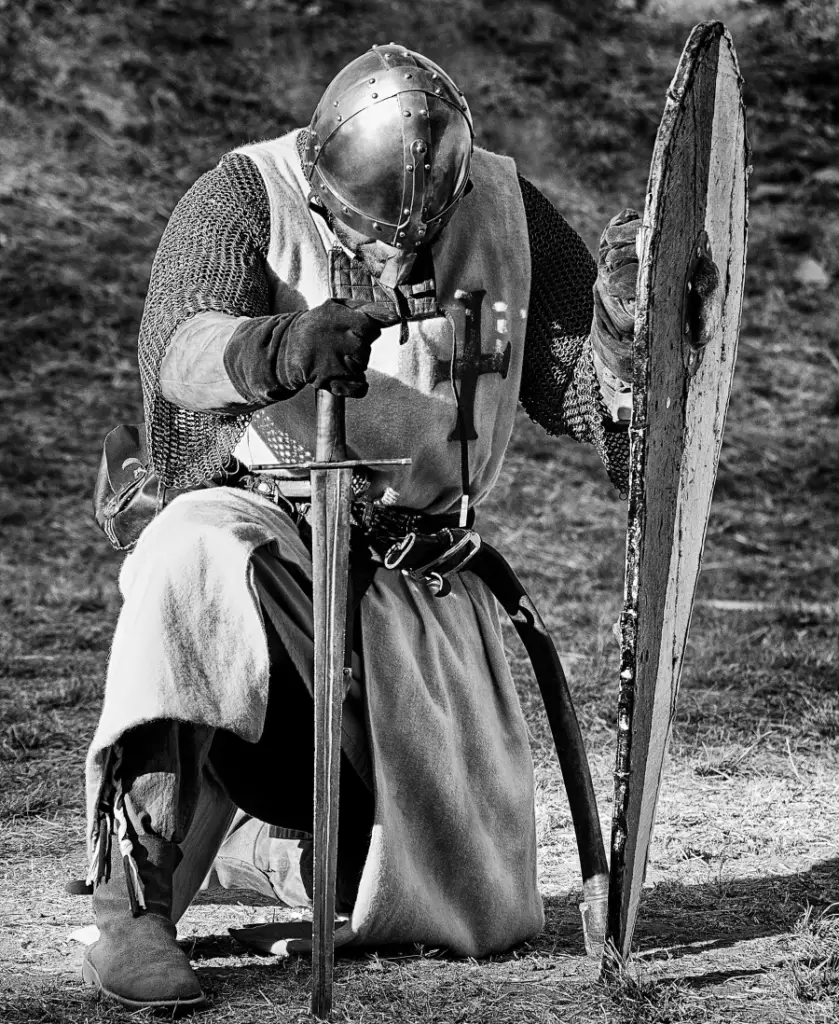
Knights would bow to Lords, Ladies, and clergy in respect. Peasants would bow to all of the above and no i considered it a religious pious deed unless it was meant to be so in a Cosmic Mass or procession.
In ancient Greek and Roman times bowing was a sign of respect and greeting as well as a sign of honour given to those of higher position. Information technology was not demeaning to bow to someone, but a sign of practiced graphic symbol and a denizen that understood the social order.
According to this NPR interview with Slate magazine's Andy Bowers, bowing was the norm in the 1700s and early 1800s American culture. It began to fall out of favor as populist political movements became stylish and decried the lines between those in ruling positions and the people of the country. Information technology was relegated finally to high order and the elite by the end of the 1800s.
The loss of the exercise was at least partially due to the loss of the virtue of respect for authority and 1 another in these cultures. The martial arts and some Asian cultures still concur honor and respect in high esteem. Information technology is a sign when a martial artist bows that that practitioner, the teacher, and their art hold to these virtues nonetheless today.
Some styles of martial arts today, to be off-white, have simply replaced the bow with mitt shakes, hand slaps, and 'fist bumps'. There is something to be said though for thousands of years of tradition. It is never a good idea to toss that kind of worldwide agreed upon value for a 'libation' fad. Yet, information technology must be said that there is some respect in these newer forms of expression.
How Bowing Is Used in the Martial Arts?
Bows are performed before sparring matches, competition bouts, training sessions, entering or exiting an established training area, toward photos of bequeathed instructors, and the listing goes on. There are many instances a bow is used in the martial arts. Here we can survey a few of the master reasons.
Martial Arts Bowing as Respect
Information technology has been stated before that the respect for opponents, the seriousness of situations and places, and instructors are a foundation on which most bowing in the martial arts stands on today. When one is going to struggle with some other, in that location actually is a bond created that is strange and unique.
Some of the strongest bonds amidst people is when they have to struggle together to reach a common goal. Oddly enough this same thing occurs when nosotros struggle against 1 some other likewise. So the struggle is honored and even sometimes a sacrifice.
In New Zealand's civilization, the Haka can exist a warning to a foe, a warriors sign of respect for those well-nigh to dice along side them, or for the dead coming dorsum from war. I learned a lot about respect when in New Zealand giving seminars to schools, war machine, and police personnel. Respect is one virtue that could save us in the end.
I of the most moving videos I take seen in a long while is a Haka done for returning soldiers from the Middle East conflict by the New Zealand soldiers of his company. This level of respect for one that gave the ultimate cede sends chills downwardly my spine. Respect.
Humility in the Bow
It takes a certain level of humility to admit that another person deserves your respect. This could accept been earned through achievement, aggregating of wisdom, or by status given to them past your customs. Whatever the reason, when someone actually deserves respect, character demands that we humble ourselves and requite our ascension.
Sadly in our civilisation of heightened self esteem for no other reason than because we are breathing today, we have lost the desire for humbleness and any sense of its importance. Self esteem is important in its place. We need to regain the sense of deferring to those more learned or experienced.
I cringe sometimes as memories reemerge, every bit they oftentimes do of embarrassing moments from my teen years. I can remember having arguments with teachers or bosses thinking I knew and so much. I learned later on through years of hard training with world class athletes that no matter what you think you know or can exercise, there is always someone that knows more than or tin can practice it better.
Bowing is a sign that at least the student is on the path to agreement the value of humbleness. Humbleness could fix many social ills. It just takes us causing the ripples in our own lives to start the tidal waves in the future.
Bows in the Martial Arts are Sometimes Sentiments Like Thanks or an Apology.
Many times a bow is much more simple. It can exist used as a give thanks y'all for someone assisting you lot with something, purposefully not landing a hard shot that yous totally would have eaten, or advice given.
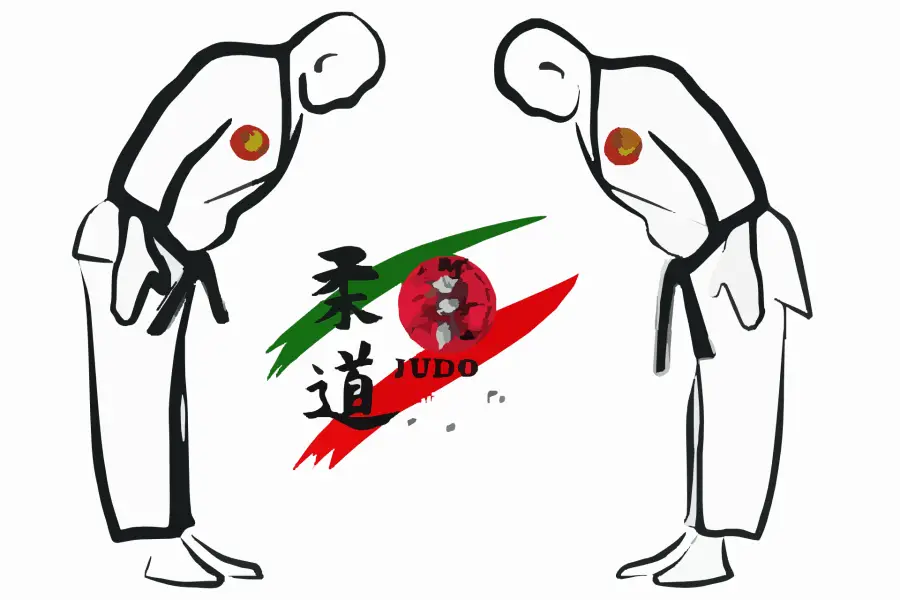
It is rare in our civilisation that nosotros follow a thank you with a handshake, just if you recall near it, many times people with requite a slight nod. This is a remnant of the bow that used to be in our civilization still holding on. Many times this slight nod says what words tin can non. At that place is no difference sometimes in a bow in martial arts.
Then in that location are the bows that limited an apology. These tin can be given when illegal techniques are mistakenly used in contest, etiquette is forgotten in a class, or an accident of whatever other kind is committed. Information technology shows a little more earnestness in the amends.
This can be done by another student or fifty-fifty an opponent in a match when it is necessary. In both of these instances information technology is also a sign of respect. Giving a sincere and hostage amends rarely comes without it.
Bows as Greetings
Sometimes bows are used every bit greetings or goodbyes betwixt boyfriend students or betwixt students and instructors. Once again information technology all points dorsum to respect and not thinking of yourself also highly. It becomes like a symbol between students that they are indeed on the aforementioned journeying.
Greetings have taken on many forms in dissimilar cultures throughout the history of flesh. Kissing, hugging, mitt shaking, and bowing are but some of the many varieties. Usually the method holds more meaning than simply hello or come across you side by side week.
The type of hello could speak of societal condition, relationship status, or the business at hand. Likewise in some Asian cultures the deepness of the bow indicates the honor given to the recipient and thus the humility displayed by the one bowing.
Whether it is through different forms or by intensity of the form, greetings can hold many hidden meanings. Bowing in this mode is no different. It tin exist done in a short informal or deep honorific manner. It can likewise simply be an acknowledgement that you and the other person are both martial artists.
Are There Elements of Religious Worship in a Martial Arts Bow?
In that location is no dubiousness that in religious ceremonies the bow is done with pious and worship intentions. This has to be understood with a very specific distinction that makes a difference betwixt these types of bows and those performed in the martial arts.
There are even these distinctions in religious types of bowing. In the Catholic organized religion bowing to statues or icons has no worship intent, but shows veneration or respect. In Islam, this stardom is not delineated. Many Muslims will not bow fifty-fifty in certain martial arts contexts for this reason.
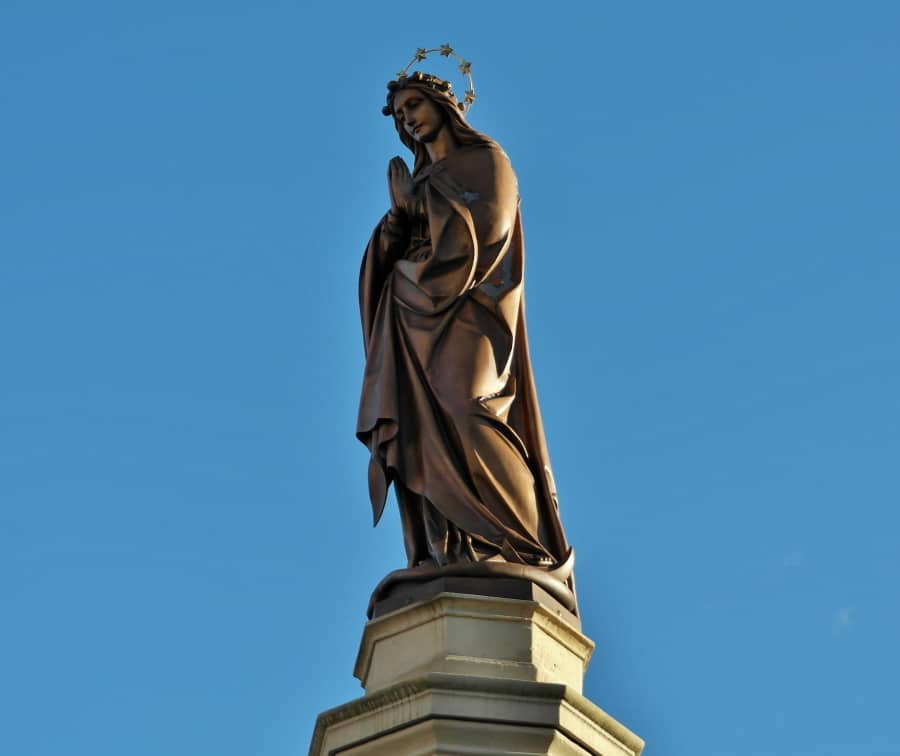
The intention and context behind any activity gives it its meaning. We see the same affair in language with the dissimilar meanings of words that tin alter with simple sentence ordering and even slight intonations in our voice. The aforementioned thing occurs with something as multi-purposed as a bow.
Simply considering someone is bowing toward a statue, photo, person, or building does not automatically mean they are intending to accredit worth (worship) to it beyond the intentions described above. There most certainly could be this intent, but without it in that location is no cause for assuming it.
In the martial arts there is no integrated worship in near systems. In that location are some rare instances of this, merely it is plainly stated and would be immediately apparent to new students. In my 30 years studying the martial arts and over 25 years teaching I have never encountered an instance where someone integrated religious elements into their training, much less accidentally participated in any.
Does Bowing to Photos of Instructors Have Religious Connotations?
This is a question that can be cleared upward by a brusk story from a trip I took to Texas to give Kali and MMA seminars. I was gone for approximately a week and would regularly talk to my wife on the phone in the evenings. During that fourth dimension I would have pictures of my wife or 4 kids with me.
Sometimes before bed I would even take out the photos and run my hand across them or even kiss them. Yeah sure, I am sappy at times. You got me.
My question is though… Isn't that worshiping my family. I kissed a photo. That has to be worship doesn't it? I think you get the picture (pun intended). I was no more worshiping them than Karate students bowing to pictures on a wall depicting founders of their style of martial arts.
It has to be intentional to matter. The religious connotation is not presupposed in whatsoever action, and that includes bowing in the martial arts. Bowing in and of itself is a tool of expression. The pregnant of that expression originates with the ane doing it, not with the tool.
Bowing to Country Flags
In some cultures nationalism is seen as a positive quality to be embraced and in others information technology has a negative one. Here again we have a problem of some not seeing the nuances of the situation. Affectionate the value of your own civilization and homeland is a good quality. This also goes for honoring the same in the lands of others.

This is what bowing to flags of other nations shows. It is a humbleness in acknowledging the qualities of other cultures and showing appreciation for what you are being given from that group of people. This is in no fashion casting a vote for the superiority of any nation over some other. We are naturally going to value our ain home and civilisation, but to honor some other's shows good character.
One can be appreciative of what others have accomplished without degrading their own. In the aforementioned manner, we can be appreciative of the cultures that brought the states techniques and traditions we learn from in the martial arts without disparaging our ain. It is possible since nosotros are not flat characters in a sitcom or a children's volume. Humans take the capability of existence much smarter than nosotros sometimes desire to give credit for.
And so, bowing to the flags of countries where the art you are studying originated is not in whatsoever way disrespectful to your own. On the contrary, information technology shows that your country still produces people with the confidence to give credit to others without feeling that information technology somehow makes you lot less.
Kneeling While Bowing
Kneeling is another sign to some that whatever is being done has to have a religious aspect to information technology. Like with the other concerns, this is non the instance. Kneeling in Asian cultures is a sign of humbleness and more importantly a posture of listening and learning. In the w sitting is this symbol.
It does not hateful because someone is on their knees that automatically religious deportment take to follow. For instance, well-nigh grappling arts spend a bulk of their time sitting, lying downward, or on their knees. So information technology stands to reason that they accept bowing postures on their knees as well.
In traditional martial arts styles, kneeling is a sign of higher respect for the person, upshot, or location. Though some Asian cultures use kneeling equally a posture for worship, similar most all other cultures, information technology should not exist permanently fastened to the posture. These traditional martial artists are not in any fashion worshiping when they are using this position to show respect.
What makes something religious or not is non a posture, simply an intention for it to exist religious. It is a highly rare case if you notice yourself witnessing a true religious display in the martial arts. Honoring ancestors is simply that, showing accolade not worship. Giving respect is not the same as pious reverence.
The Takeaway From Martial Arts Bowing…
Bowing has been around equally long every bit humans have had a waist. Bending down in many dissimilar ways tin evidence respect to those with authority or giving place to those you choose to honor. Virtually all cultures and lands have had some course of information technology in their past. The martial arts simply continue the tradition live.
In the martial arts, laurels and respect are at the root of almost of the instances of bowing you will encounter. Other motives, like apologies and greetings can be included, just the foundational reason will ultimately come back to respect. This respect is not but traditional, but needed in a sport and art that has so many possibilities for misunderstandings, mistakes, and injuries.
The religious undertones of bowing that may seem off putting to some, should not cause such uneasiness. The practical intent of the bow in the martial arts is not for religious purposes. It is possible in some outlier instances that someone may have such an intent. It is simply non a real office of the martial arts as a whole. This tin be said for many things in life. The rule is not defined past the exceptions. The dominion is the norm.
Source: https://littleninjaparenting.com/bowing-in-martial-arts-what-does-it-mean/
Belum ada Komentar untuk "What Does the Beggining Bow in Martil Arts Mean"
Posting Komentar