Will Brown Grass Turn Green Again
Why Is My Grass Turning Chocolate-brown and Dying?
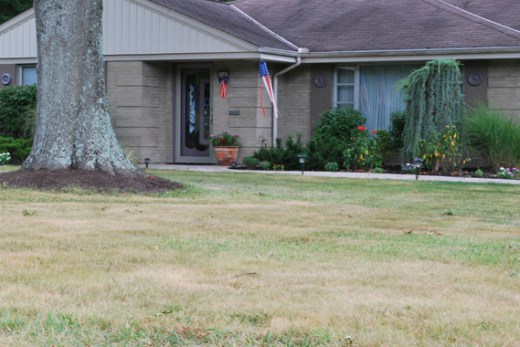
Your cute backyard is dying, and you've got brown patches on your grass. Go the cure!
Grass turns brown when roots can no longer grab nutrients or water from soil, or when soil doesn't contain enough nutrient or water.
Here are the typical culprits, and tips on how you can light-green upward your grass again.
Drought/Estrus
During periods of loftier rut and low water, many turf grasses become dormant. This is a normal condition; your grass will recover when the temperature drops and rain resumes.
To decide if drought is leading to brown grass, look for prematurely dropping tree leaves that are folded up like they're praying for rain, says Boob tube host Jason Cameron, a partner with TruGreen lawn intendance service.
To sustain a drought-dormant lawn, utilise ½ inch of water every two or three weeks during the drought. To green it up again, apply 1 inch of water every 6 or 7 days — virtually ii hours of sprinkler apply. Or await until temperatures drop and rain resumes, when information technology volition turn dark-green again on its own.
Sprinklers Misadjusted
If your backyard sports dark-brown patches during heat waves, make sure your sprinklers are reaching all areas. Most sprinkler heads are easily adjusted with a modest screwdriver. Depression-to-the-basis pulsating (sometimes chosen impulse) sprinklers are easier to fine-tune than oscillating sprinklers.
Weeds
Common weeds tin can win the competition with your backyard for water and nutrient. Controlling these weeds is tricky. Utilize a pre-emergent herbicide in spring to forestall weed seeds from germinating. Or, hire a professional lawn care company that will customize an annual lawn maintenance and treatment plan.
Disease
Dozens of diseases and fungi can turn your backyard brownish. If your grass is covered with white, black, or brown substances, then lawn disease is probably your trouble and should be diagnosed and treated past a lawn specialist. Proper lawn care -- sufficient water in early on forenoon, regular mowing, skillful lawn aeration, and thatch management -- volition heighten a salubrious backyard more probable to resist backyard disease.
Cinch Bugs
These drought-loving bugs drain plant juices like tiny vampires. Offset your lawn will expect wilted, then xanthous, and eventually chocolate-brown. Pull back a wilted patch and look for small red, orangish, brown, or black bugs (i/32 to one/v inch depending on life stage) with white markings.
Thatch removal and consistent moisture are practiced preventative measures; insecticides are a last-ditch effort considering many contain harsh chemicals that run off into the watershed and can harm beneficial insects.
Grubs
These beetle larvae feast on turf roots and mimic drought damage. Use a shovel to undercut a 1-by-1-foot square of turf, then skin back the patch and look for more than 10 grubs/square foot, which indicates a problem.
To control grubs, let your backyard dry out thoroughly before watering over again. Or, constitute low-maintenance turf grasses that are more grub-tolerant than Kentucky bluegrasses or perennial ryes. Also, you tin try spreading milky spore pulverisation, a natural organism that controls grubs.
Pet Waste product
Round patches of dead grass indicate animals are peeing (urine contains acrid) on your lawn. If you know a pet has a favorite spot, flush the surface area with water to dilute the acid.
Related: Landscaping Do's and Don'ts When You lot Take a Canis familiaris
If Necessary, Call in the Experts
Diagnosing the problem can exist tricky, and your local extension agent or a lawn intendance company tin can help you determine exactly what ails your lawn.
Ounce of Prevention
Here are some prevention tips that will help your grass stay green, courtesy of Kevin Doerfler of Grass Seed U.s.a..
- Aerate and inter-seed (add seed to existing grass) in fall when weather has cooled and rain is likely.
- Fertilize in spring and fall. Don't fertilize when your grass already is stressed or during drought.
- Water in the early forenoon to combat fungal diseases. H2o deeply to attend roots.
- In summer, raise mowing height to three inches or above. The taller grass will shade roots and reduce water loss from evaporation.
- Perform a soil examination to determine what amendments your backyard might need.
Related:
- Why Fake Grass Is Gaining Popularity
- Early Spring Backyard Intendance Tips to Revive Your Frozen Turf
Source: https://www.houselogic.com/by-room/yard-patio/brown-grass/
Belum ada Komentar untuk "Will Brown Grass Turn Green Again"
Posting Komentar